
Where should a porta potty go on a job site?
Pick flat, stable ground first. ADA Standards section 302.1 requires floor and ground surfaces be stable, firm and slip resistant, and that rule is worth following even where an accessible unit isn't required, because a tipped standard unit is a bigger problem than a permit. Keep units within a short walk of the work zone. On agricultural sites, OSHA 1928.110 sets a quarter mile maximum walk to a field sanitation facility, which is a useful benchmark even off the farm. Leave clearance behind the unit for the service truck, and if you're adding a roll-off dumpster to the same site, remember a delivery needs about 60 feet of straight clearance behind the truck. Avoid drainage paths and low spots that pool after rain. If the site also needs a temporary fence rental around the unit cluster, plan the gate swing before anything gets delivered, not after.
Do I need a permit to place a porta potty in San Mateo?
Placement in the public right of way needs confirming with the city; we're not going to guess at a rule here. If your unit sits entirely on private property, set back from the sidewalk, you likely avoid the question altogether, but a corner lot or a street-facing job should call ahead. This is different from a dumpster placement permit, which is a separate approval some cities require when a roll-off sits on the street rather than a driveway; check our dumpster permit requirements page before you assume a driveway placement is exempt too. San Mateo Porta Pros can position units to keep you off the curb entirely when that is the simpler path. For events with heavier foot traffic, our event restroom rental guide covers layout patterns that keep lines moving without blocking a fire lane.
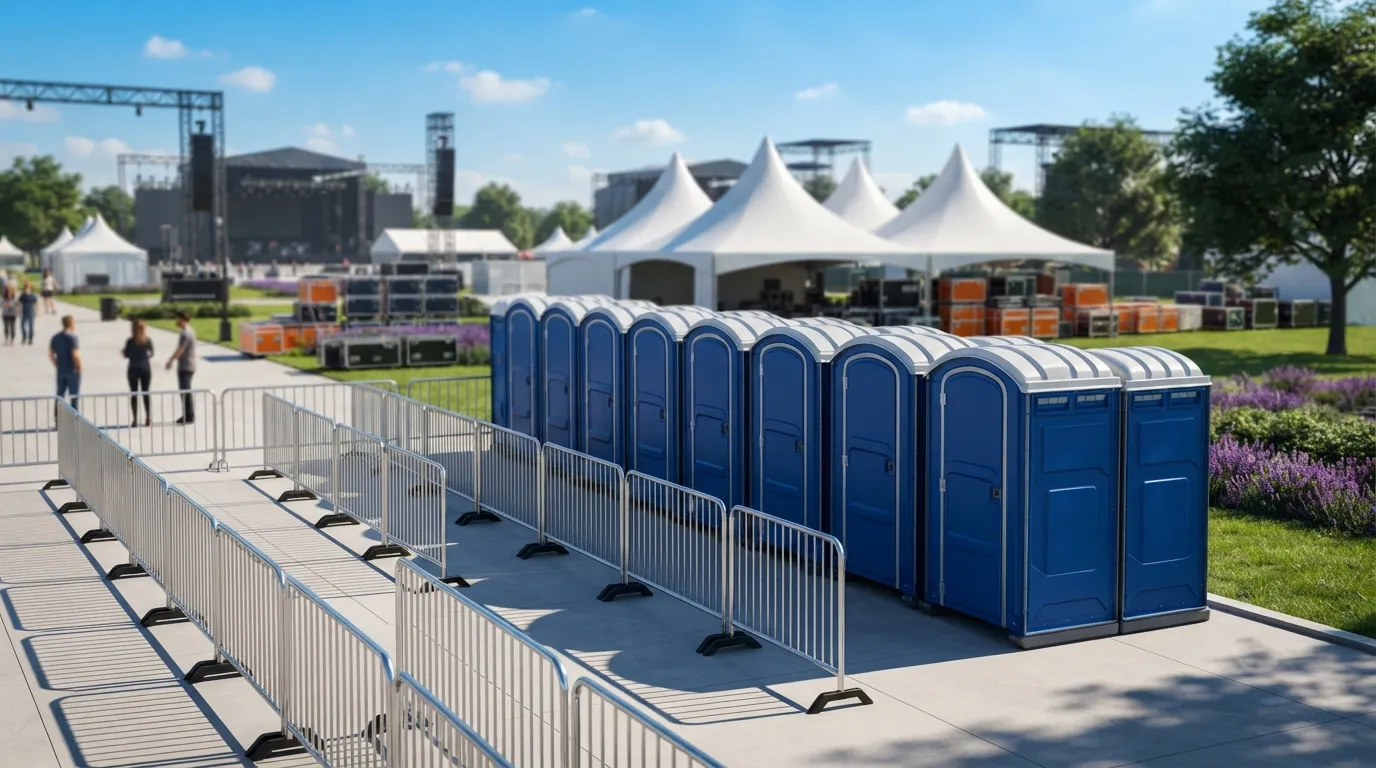
How many units and how much space does each need?
A standard unit runs about 44 by 48 inches on the ground and stands about 92 inches tall, so budget roughly a 5 by 5 foot footprint per unit plus swing room for the door. Worker counts drive the number you need under OSHA 1926.51(c): one toilet seat for 20 workers or fewer, then one seat and one urinal per 40 workers as the crew grows past that, dropping to one per 50 once you're at 200 or more. Our how many porta potties do I need page runs the math against crew size and shift length. If you're renting an ADA accessible porta potty, plan for a 60 inch turning circle per ADA Standards section 304.3.1 and a 36 inch clear route per section 403.5.1. Where units are clustered, ADA Standards section 213.2 calls for at least 5 percent to be accessible, never fewer than one. Doors need a 32 inch clear opening under section 404.2.3.
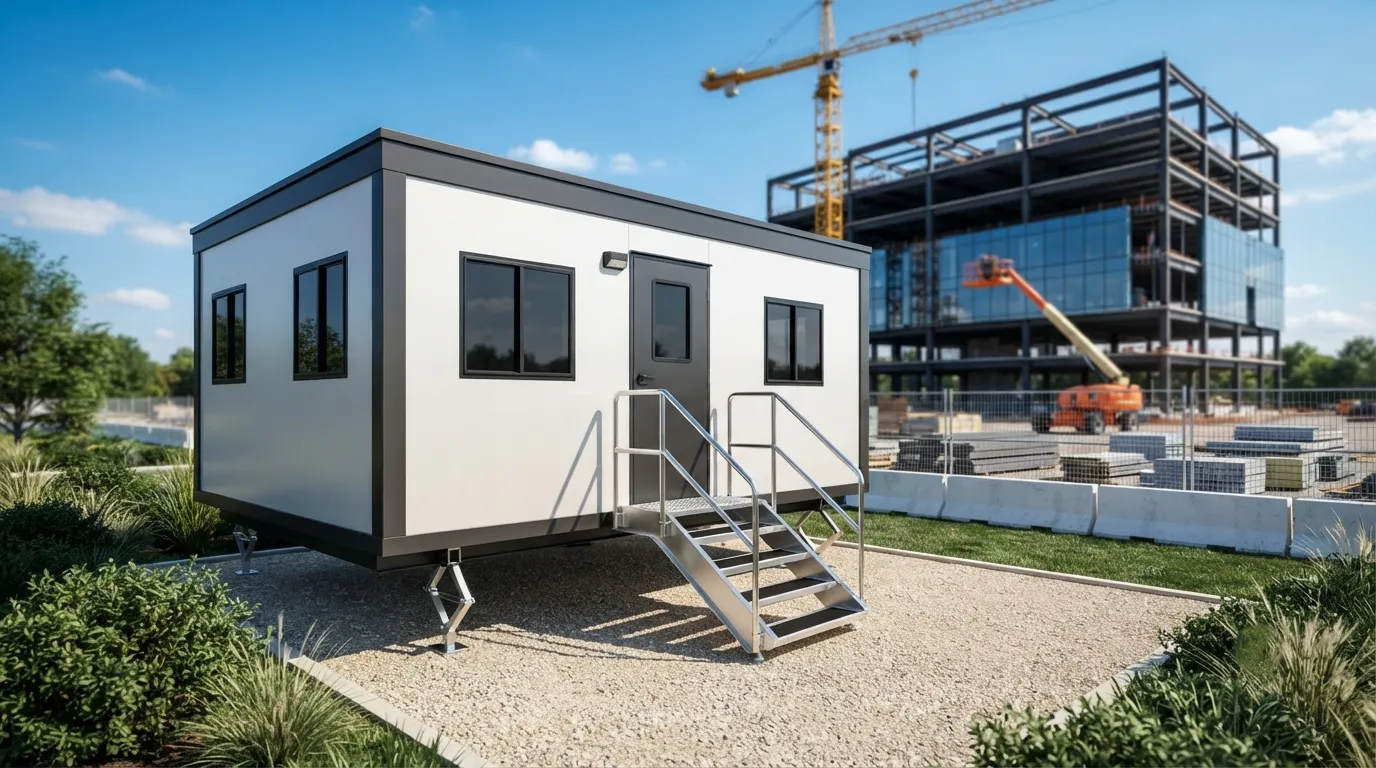
Where do restroom trailers, storage containers and dumpsters need to sit?
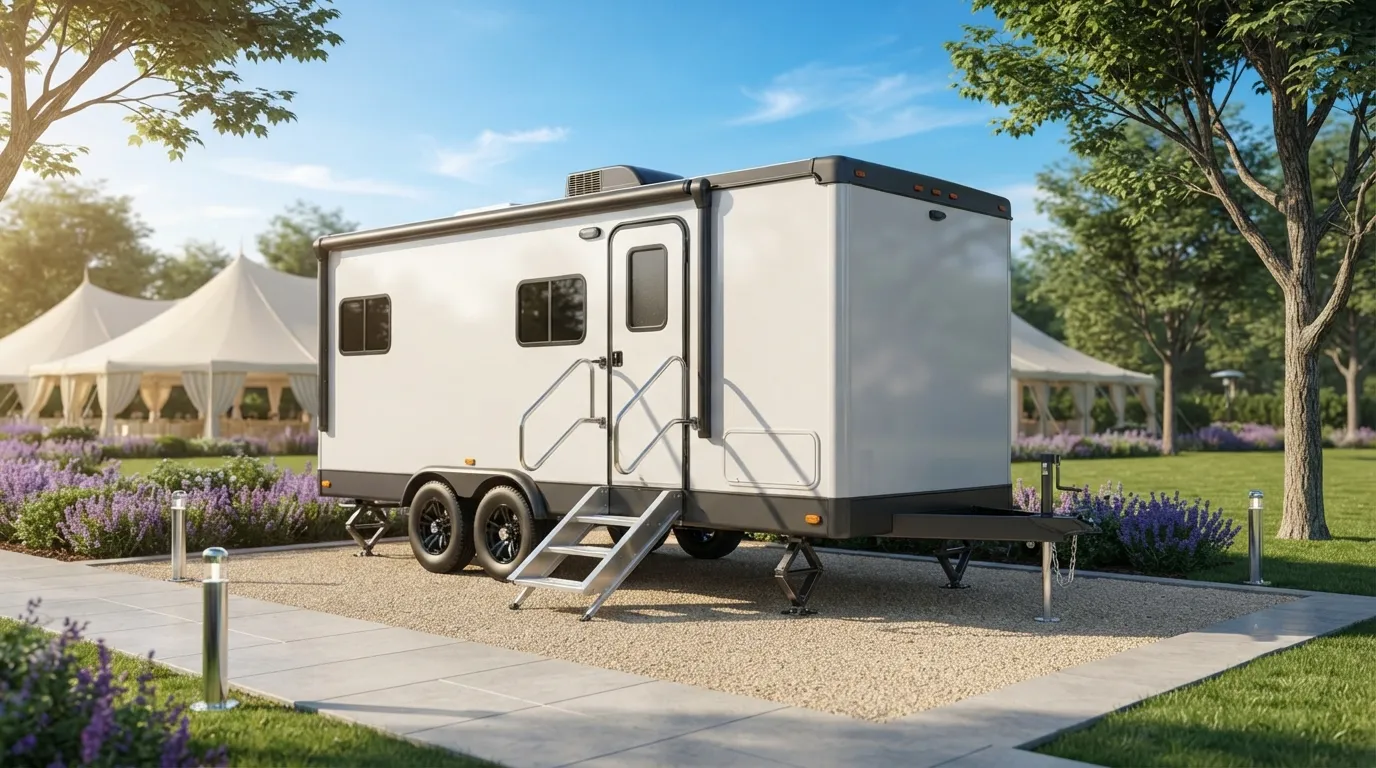
Restroom trailers need level, compacted ground and a nearby power source; check our restroom trailer rental page for hookup details before the truck arrives, especially for an 8 stall restroom trailer that carries real weight once loaded. A mobile office trailer rental needs similar prep, and if a trailer arrives with damaged or misaligned mobile office trailer replacement doors, flag it at delivery rather than mid-job. Storage containers are simpler: a 20ft storage container or 40ft storage container just needs flat ground rated for the load and enough clearance for the delivery truck to set it down straight. Dumpsters need the same 60 feet of straight clearance behind the truck mentioned above, plus a surface that won't rut under a loaded roll-off; our dumpster sizes and dimensions page has footprints by yard size. Keep dumpster placement off soft lawn areas in San Mateo where possible, since a loaded 30 yard box concentrates a lot of weight on a small footprint.
FAQ
Can a porta potty sit on gravel or dirt?
Yes, if it's compacted and level. Loose gravel or soft dirt lets the unit lean once the tank fills, since a standard tank holds 60 to 70 gallons. San Mateo Porta Pros will reset a leaning unit on the next service visit, but preventing it up front saves a callback.
Does a handwashing station need its own placement plan?
Yes. Handwashing stations need level ground near the work zone and, per 29 CFR 1910.141(d)(2), soap and towels or a hand dryer, not just sanitizer. See handwashing station rental for unit options and our handwashing requirements page for the full rule set.
What replacement parts are available for portable sink units?
Ozark River portable sink replacement parts, including pumps, spouts and reservoir caps, are available through most portable sink suppliers; ask when you book a portable sink rental whether a spare kit ships with longer rentals.
Is a septic tank placement guide different from a porta potty one?
Related but separate. Septic work depends on tank depth and access for the pump truck, not foot traffic patterns. A Placerville septic pumping service follows the same access-clearance logic as our septic pumping service work closer to San Mateo, roughly 5.3 miles north of Belmont.
How far in advance should I plan placement?
Call at least a few days out for standard jobs, sooner for events near Foster City or Burlingame where site access gets tighter. San Mateo Porta Pros walks the site by phone or in person before drop-off on anything with tricky clearance.
Next step
Get a delivery date
Tell us the address, the dates and the headcount. We size the order and confirm the route.