
What does OSHA require for portable toilets on a construction site?
The rule is 1926.51(c)(1), and it works on a sliding scale. Twenty workers or fewer, you need 1 toilet. Between 20 and 200 workers, you need 1 toilet seat plus 1 urinal for every 40 people. At 200 or more, that ratio loosens to 1 seat and 1 urinal per 50 workers. Cal OSHA portable toilet requirements follow the federal standard closely, so a San Mateo job site planning around state inspection should use the same math. There is a separate rule for potable water: 1926.51(a)(1) requires an adequate supply at all places of employment, which is why a lot of general contractors pair standard porta potty rental with a water station rather than treating them as separate line items. If your crew count changes week to week, run the numbers again each time. A site that starts at 15 workers and grows to 45 crosses a ratio line, and the toilet count has to move with it. Our how many porta potties do I need guide walks through that math with worked examples, and our OSHA portable toilet requirements page covers what the city wants to see before delivery.
How many porta potties do I need for my crew size?
Count workers, then apply 1926.51(c)(1) directly: 20 or fewer gets 1 unit, and every 40 above that adds a seat and a urinal. A 35-person framing crew in San Mateo needs 1 toilet. A 75-person crew needs at least 2 seats and 2 urinals under the ratio. Bigger jobs change the math further, and 200-plus worker sites drop to a 1-per-50 ratio. Multi-week jobs usually rent by the week or month rather than by the day, since a longer commitment brings the per-day cost down; see porta potty rental per day and monthly porta potty rental for how that pricing splits out. Every cluster of toilets also needs an accessible unit under ADA Standards 213.2, which requires at least 5 percent of clustered single-user units to be accessible, and never fewer than one. That means even a small site with just 2 or 3 standard units still needs an ADA accessible porta potty in the mix once units are grouped together. Full OSHA portable toilet requirements construction planning should factor that in before delivery day, not after; whether you are running a crew in San Mateo or fielding a portable toilet rental Oshawa inquiry from an out-of-state office, the same worker-count math applies.
Where should portable toilets be placed on a job site?
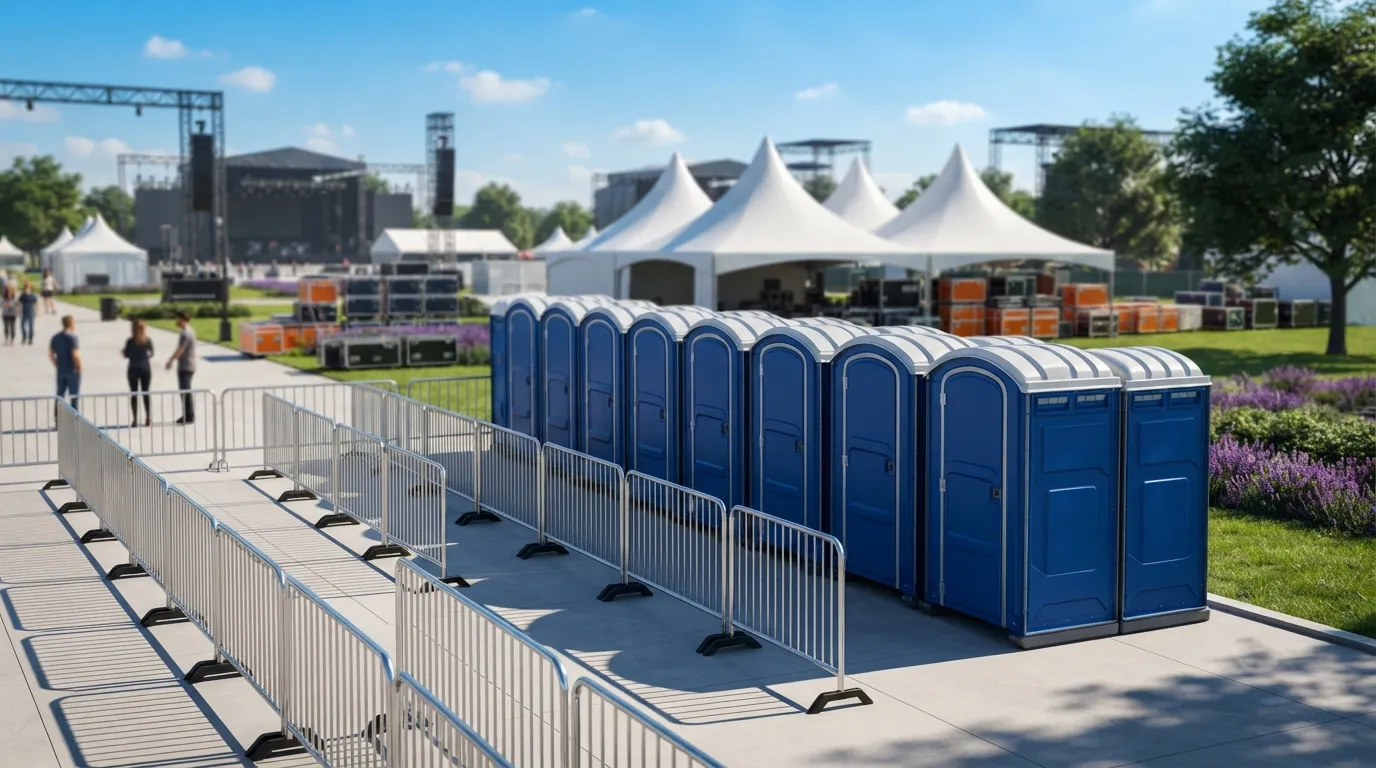
Placement has to give workers a real path in and enough room to use the unit, not just proximity to the work area. ADA Standards 403.5.1 sets a 36 inch minimum clear width for an accessible route, and 404.2.3 requires a 32 inch clear door opening on any accessible unit. Inside an ADA unit, 304.3.1 calls for a 60 inch turning circle, and 308.2.1 limits the forward reach range to between 15 and 48 inches so someone in a wheelchair can reach the dispenser and paper. A standard unit runs about 44 by 48 inches on the ground and stands roughly 92 inches tall, so tight jobsite corners in dense San Mateo lots need a real walkthrough before delivery, not a guess from a site plan. Ground surfaces also need to be stable and slip resistant under 302.1, which matters on graded or muddy jobsites more than finished ones; OSHA portable toilet distance requirements are not spelled out for general construction, so placement comes down to a real walkthrough instead of a fixed number. Our porta potty placement guide covers clearance and access in more detail, and if the unit sits anywhere near the public right of way, placement needs confirming directly with the city since that is not something we guess at from a spec sheet. See porta potty permit requirements for what to check before drop-off.
Do portable toilets need handwashing stations too?
Not automatically, but the trigger is specific. 1926.51(f)(1) requires washing facilities where workers apply paints, coatings, herbicides or insecticides, or handle other harmful contaminants; it is not a blanket handwashing mandate for every job site. Where it does apply, 29 CFR 1910.141(d)(2) requires soap and towels or a hand-drying device at that station; hand sanitizer alone does not satisfy it. A painting crew or a landscaping crew applying herbicide in San Mateo should pair their toilets with a handwashing station rental or a portable sink rental rather than relying on a hand sanitizer station rental alone. Agricultural work has its own standard: 1928.110 requires potable water, toilets and handwashing within a quarter mile walk, at 1 facility per 20 hand-labor employees, which matters for farm and agricultural restrooms work near San Mateo. For a full breakdown of when handwashing is required versus recommended, our handwashing requirements page lays out the distinctions site by site.
What happens if a job site doesn't meet OSHA's toilet ratio?
An inspector citing 1926.51(c)(1) can flag undercounted toilets as a sanitation violation, and repeat violations escalate fast. Recount workers weekly on growing crews. San Mateo Porta Pros can add units same-day in most cases; check emergency porta potty rental if a citation risk is immediate.
Does Cal OSHA require anything different from federal OSHA?
Cal OSHA generally mirrors 1926.51(c)(1) for toilet ratios on construction sites, so contractors working in San Mateo should plan to the same numbers used federally. State inspectors enforce the same worker-to-unit ratio. When in doubt, size up rather than down.
How far can portable toilets be from the work area?
OSHA doesn't set a fixed distance for construction, but 1928.110 sets a quarter-mile walk limit for agricultural field sanitation specifically. For general jobsites, keep units close enough for a quick break without long downtime; see our porta potty placement guide for practical spacing.
Do event sites follow the same OSHA ratios as construction sites?
No. OSHA's construction ratio applies to worksites with employees, not public events. Events typically plan by expected attendance instead; see event restroom rental or how many porta potties do I need for that math.
Can one ADA unit cover an entire San Mateo job site?
Usually yes for a single cluster, since ADA Standards 213.2 requires at least 1 accessible unit per cluster regardless of size. Multiple separated clusters across a large site each need their own accessible unit.
Next step
Get a delivery date
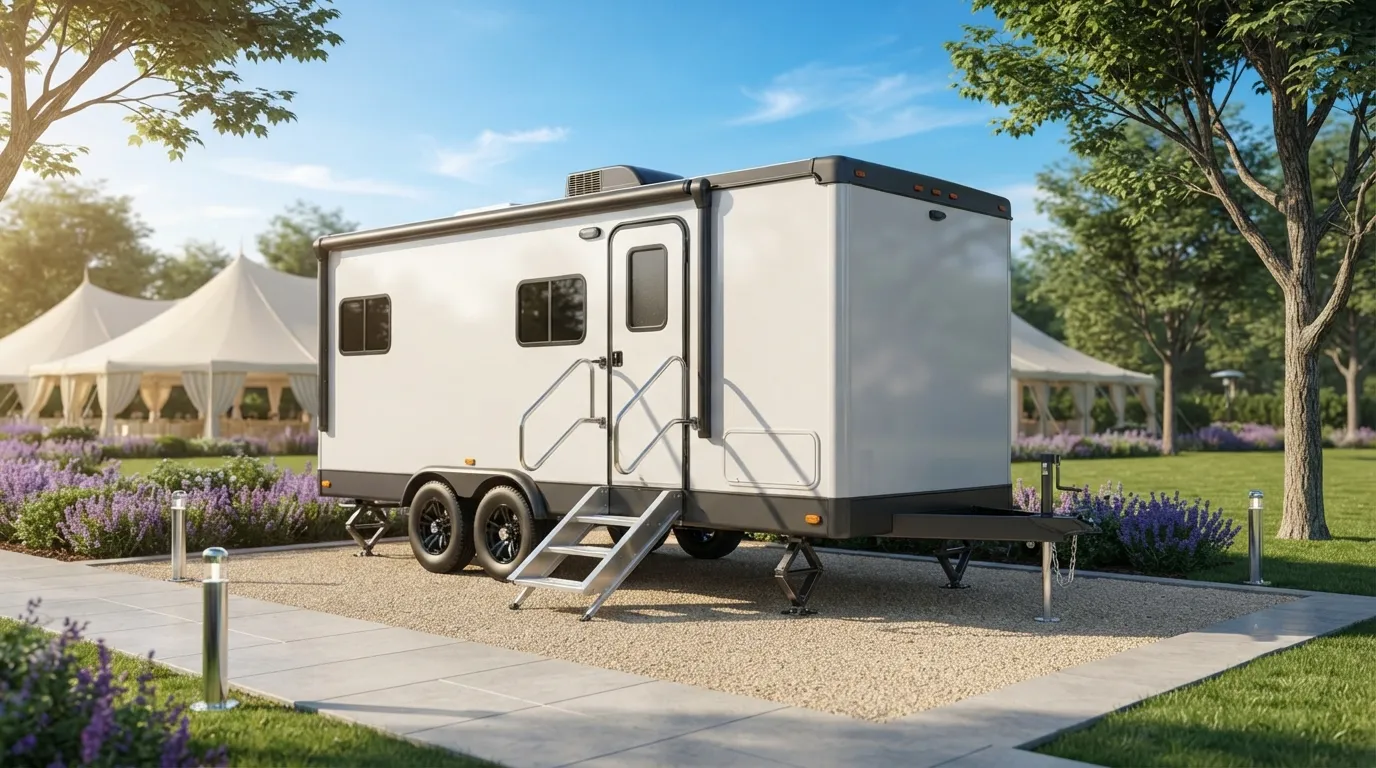
Tell us the address, the dates and the headcount. We size the order and confirm the route.